
Last updated: 4 October 2026
Decograde Concrete Resurfacing resurfaces worn exposed aggregate concrete in Panania and Canterbury-Bankstown, and lays a pebble-mix surface over plain concrete for a stone look. Call (02) 9090 4131 to talk about your slab.
What’s Included
- Assessment of the existing aggregate or plain slab.
- Cleaning of moss, mould and stains.
- Removal of loose stones and failed patches.
- Surface preparation so the new layer bonds.
- Application of the pebble-mix surface.
- Sealing to the manufacturer’s specification.
What an exposed aggregate finish gives you
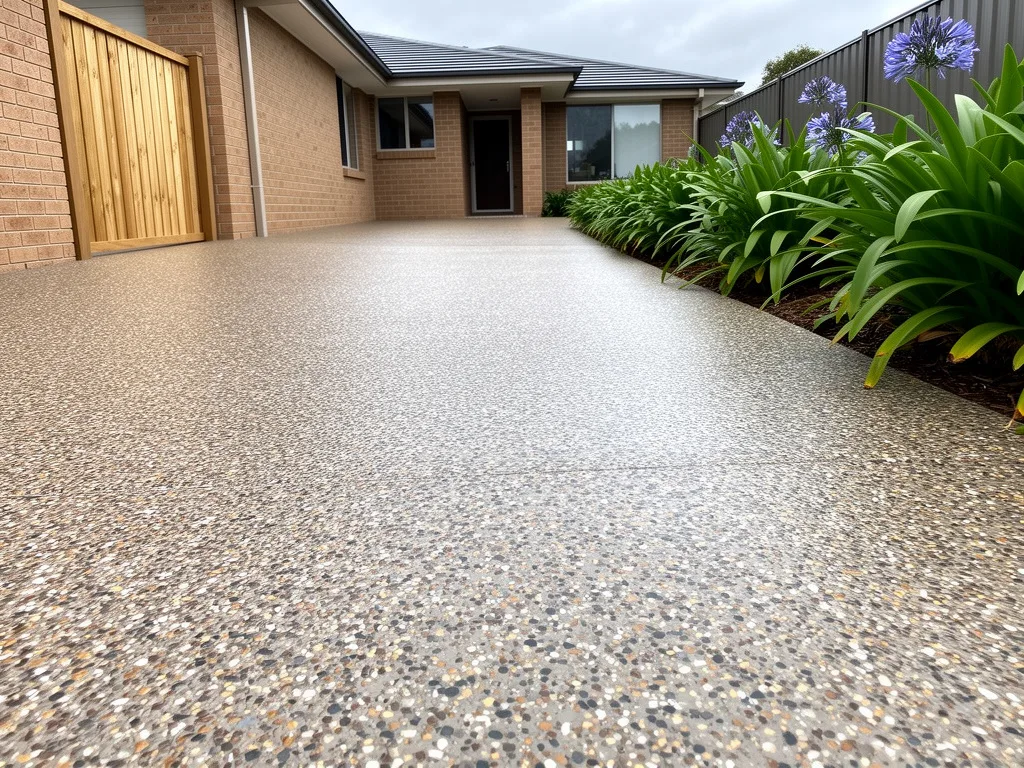
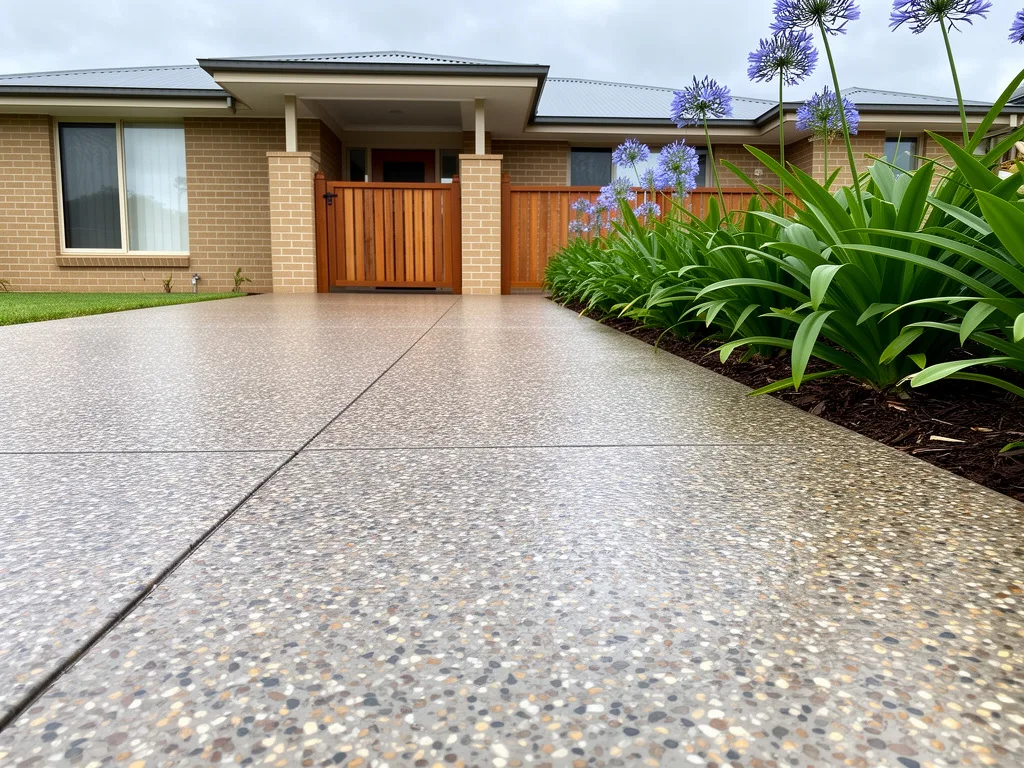
With exposed aggregate, controlled surface abrasion reveals the stone, so the look is not paint or dye. That also means colour comes from the stones themselves. Resurfacing with a pebble mix recreates that look over a slab that has lost its own. The result gives good grip and hides dirt.
Ready for a practical answer? Call (02) 9090 4131 to discuss your project.
Exposed aggregate resurfacing or a full re-pour
Every resurfacing job starts the same way but does not end the same way. Three real approaches, compared on the factors that decide whether the result lasts.
| DIY | Unlicensed operator | Licensed & vetted contractor | |
|---|---|---|---|
| Surface preparation | Often skipped or rushed — the step most likely to be under-done without trade experience | Varies widely; prep is the easiest corner to cut and the hardest to check afterward | Assessed on site before any product is applied |
| Expected lifespan | Depends heavily on DIY prep quality; failures often trace back to prep, not the product | Depends on who you get; no consistent standard | Backed by manufacturer application specifications |
| Insurance protection | None — you carry the risk | Often none, or unclear | Ask about insurance before work begins |
| Licence accountability | Not applicable | Often unverifiable | Checked before joining our network — verify any licence yourself |
| Total cost over time | Lowest upfront, highest redo risk | Can be lowest upfront, but redo cost if prep fails | Higher upfront, priced for a result meant to last |
How We Diagnose Aggregate Wear
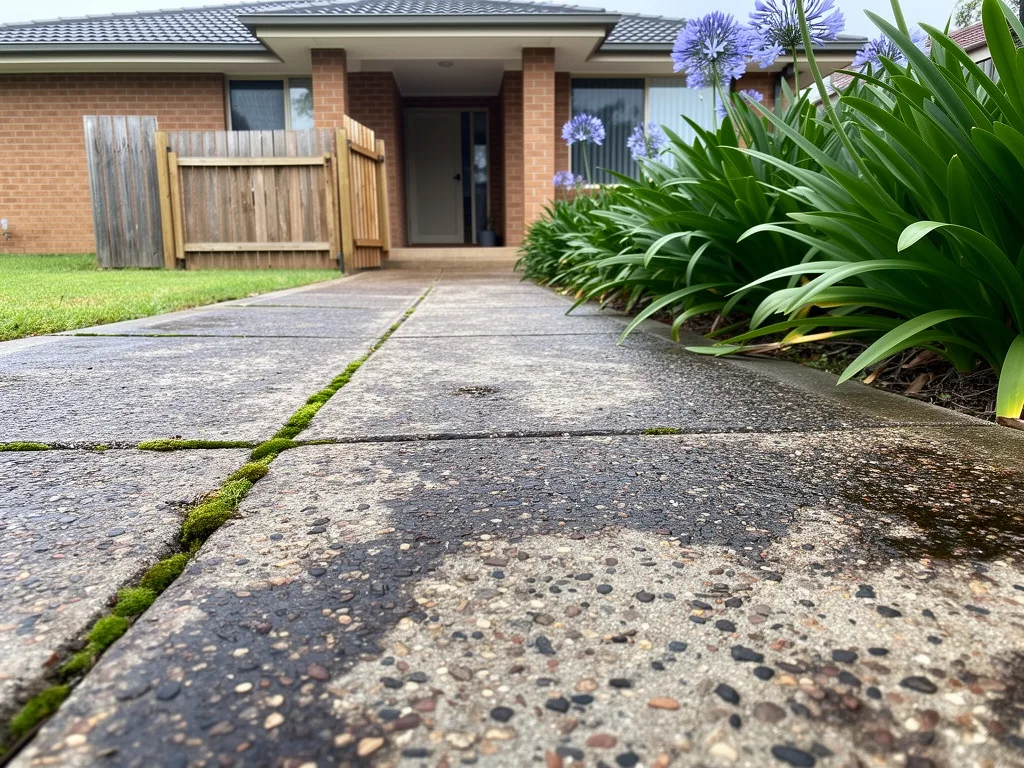
We look at where stones have come loose, how deep the loss goes and whether moss has taken hold in the low spots. Isolated loose stones can be repaired. Widespread loss across a driveway apron or a path often points to a surface that has reached the end of its life, and a new layer is the better route.
Cracks get the same check as on any slab: width, movement and cause. Edges deserve a look too. Stones along the edge of an apron or step come loose first because less concrete holds them, and a chipped edge lets water in.
Questions about your specific surface or budget? Call (02) 9090 4131 — no obligation.
Our process for a stone finish
- Assess and agree the stone mix.
- Clean and remove loose aggregate.
- Prepare the surface.
- Repair cracks and fill voids.
- Apply the pebble-mix layer.
- Seal and leave to cure.
Send photos of the worn area or call (02) 9090 4131 for a free estimate.
Loose stones, moss and fading
Three things age aggregate: stones working loose, moss and algae in shaded patches, and sealer that has worn away. Sealing keeps water out and makes the surface easier to clean. How often it needs doing depends on the product, so we pass on the manufacturer’s guidance.
Aggregate over cracked ground in Panania
The suburb sits on reactive shale clay that moves with the seasons. An aggregate surface is rigid and shows movement as cracking. We look for the cause of any crack before we lay a layer over it, because a moving crack will show through a stone finish as well.
Choosing the stone mix
The pebbles set the colour, so look at samples outdoors. Smaller, mixed pebbles feel gentler underfoot and sit well beside older brick. Larger stones look bolder and grip well, but they hold more dirt between them and are harder on bare feet.
Tell us where the surface sits. A driveway apron wants grip and wear resistance. A path by the front door may suit a softer mix.
Not sure which option fits your situation? Call (02) 9090 4131 and talk it through with a contractor.
Keeping an aggregate surface clean
Moss and algae grow in the gaps between stones, so shaded areas need a regular sweep and a wash with a gentle cleaner. Use a soft brush, not a wire brush. Keep a pressure washer on a moderate setting and held back, because a close, hard blast can lift stones.
Reseal when water stops beading on the surface. The product’s own specification gives the interval.
Exposed aggregate resurfacing price guide
Pebble-mix resurfacing in Western Sydney is generally $140-$165 per m² (Inspire Concrete, May 2026). That range is higher than a plain spray-on coat because the material and labour are heavier. Your slab’s area and condition decide the final figure, and the estimate is written.
Compare with Read more about spray-on concrete resurfacing, or see Read more about driveway resurfacing and the Read more about concrete resurfacing overview.
Ready to talk through your project?
Call (02) 9090 4131Get a Free EstimateStill weighing your options? Call (02) 9090 4131 for a straight answer.
Exposed Aggregate Resurfacing across the wider area
We reach the suburbs around Panania. See Exposed aggregate resurfacing in Revesby, Bankstown and Picnic Point for the local page. Hours: Mon–Fri 7am–5pm, Sat 8am–2pm.
Before and after the resurfacing
Quick answers
Can exposed aggregate be resurfaced?
Yes, if the slab underneath is sound. Loose stones and failed patches are removed, the surface is prepared, and a new pebble-mix layer is applied and sealed.
Is it the same as new exposed aggregate?
Not exactly. New exposed aggregate has the stone revealed by surface abrasion. Resurfacing lays a pebble-mix layer over the slab to recreate that look.
Why are stones coming loose on my driveway?
Age, a worn sealer, water in cracks and moss are the usual causes. We check how widespread the loss is before deciding between repair and a new layer.
How long does the sealer last?
That depends on the product system and the wear the surface gets, so we pass on the manufacturer’s guidance and any recoat interval.