
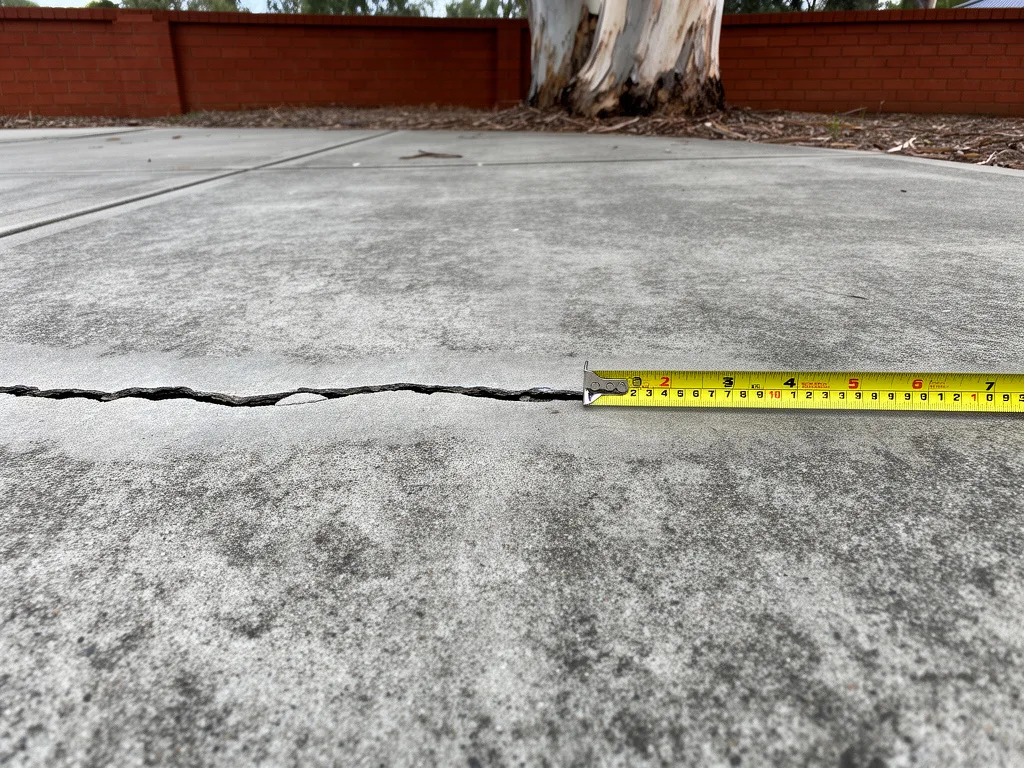
Decograde Concrete Resurfacing is asked about cracked driveways more than any other problem. The short answer is that many can be resurfaced, and some cannot. What decides it is why the crack formed, not how it looks today.
Start with the cause, not the crack
Cement Concrete & Aggregates Australia, the industry body, tells owners to identify the cause of a crack first and then decide whether it is acceptable or needs repair. That order matters. A crack from drying shrinkage has finished moving. A crack from ground that is still shifting has not.
Which cracks a resurfacing layer can cover
The same datasheet treats a crack about 0.3 mm wide as acceptable, and says cracks wider than 1 mm should be assessed one at a time. A hairline crack that has not changed in years is usually a candidate. So are crazing, a worn surface and chipped edges.
Before any new layer goes on, we clean the crack, fill it with a repair product and let it set. A resurfacing layer is thin, so it follows what is under it.
Still weighing your options? Call (02) 9090 4131 for a straight answer.
Why a moving crack comes back
Overlay manufacturers’ technical data sheets warn that random cracks in the base which are not repaired can transfer up through the cured overlay, and that the base must be sound and not moving. If a crack opens and closes with the seasons, a new surface will crack along the same line.
Not sure which kind you have? Send a few photos with a coin or ruler beside the widest crack, or call (02) 9090 4131.
When replacing the slab is the better answer
Some slabs need more than a surface. Signs we look for:
- A section that rocks or sits lower than its neighbour.
- A crack with one edge higher than the other.
- Cracks that keep widening after repair.
- Concrete that crumbles through its depth, not only at the top.
Any of these points to a base that is moving or unsound, and a new surface over it would be money spent twice. We would sooner say so at the first visit.
Clay, trees and the Panania ground
CCAA notes that on highly expansive clay, changes in soil volume can leave a slab unevenly supported and lead to early failure. It also says tree roots draw moisture out of clay, shrinking the soil and cracking pavement nearby. Panania sits on Wianamatta Group shale, which weathers to reactive clay. A driveway with a large tree beside it deserves a closer look before anyone quotes a surface.
Ready for a practical answer? Call (02) 9090 4131 to discuss your project.
What we do about the crack first
We map the cracks, measure the widest ones and look at where the water runs. Then we tell you which are cosmetic and which need a cause fixed. Read how the work runs on our driveway resurfacing page, or see the driveway cost guide for how price is worked out.
Request a driveway estimate
Describe the cracks and send photos. We will say whether resurfacing suits the slab and give you a written estimate. Call (02) 9090 4131.