
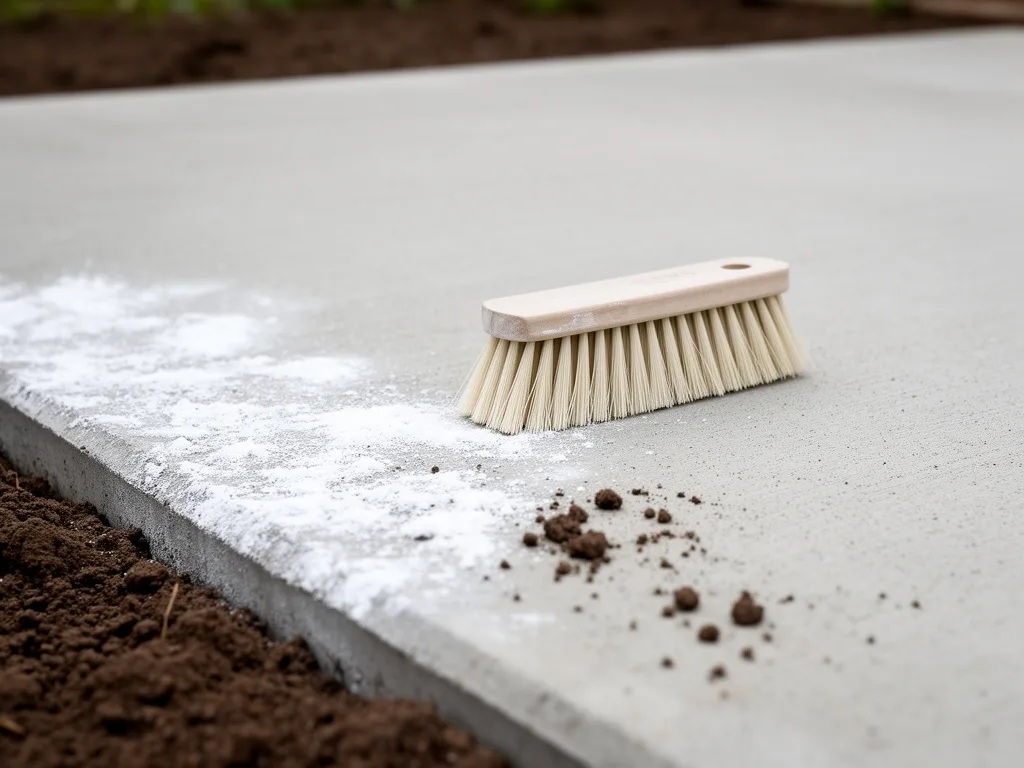
A new slab can look perfect for a few weeks and then grow white, powdery patches. Decograde Concrete Resurfacing sees this on fresh concrete and on slabs ready for resurfacing. In most cases it is efflorescence, and it is not a sign the job has failed.
What the white marks are
Efflorescence is a deposit of salts. Water moves through the concrete, picks up soluble salts, and leaves them on the surface as it evaporates. It needs salts, moisture and a way for the water to dry out. Cement supplies some of the salts, which is why new concrete shows it most.
Why it often appears in winter
The Concrete Masonry and Hardscape Association, a US body, notes that efflorescence is more common in winter because slower evaporation gives salts time to travel to the surface. Many of the salts are water soluble, and the same guidance says they often disappear with normal weathering unless something keeps feeding them.
Ready for a practical answer? Call (02) 9090 4131 to discuss your project.
How to clear it, gentlest first
- Brush it off dry with a stiff nylon brush. Avoid a wire brush, which can leave steel filings that rust and stain.
- Rinse with clean water.
- If that fails, ask a professional about a light abrasive clean or a commercial cleaner suited to your surface.
Dilute acid is a last resort, and the guidance above says to test a small area first and flush it thoroughly straight away. Acid can etch and mark concrete, so we would leave it to someone who will test first.
Not sure what is on your slab? Send a close-up photo, or call (02) 9090 4131.
Is it something else?
Not every white patch is efflorescence. Laitance is a weak, dusty layer of cement and fine particles left on the surface. A cloudy white haze in or under a sealer is a different problem, called blush. A brush and water test helps: salts usually brush away dry and return if water keeps arriving.
When it keeps coming back
A one-off bloom on a new slab fades. A patch that returns season after season points to water getting in or through the concrete. Check where the slab drains, whether a garden bed or downpipe is soaking one edge, and whether the ground beside it stays wet. Fixing the water fixes the marks. Until then, scrubbing the surface only clears the symptom for a season.
Questions about your specific surface or budget? Call (02) 9090 4131 — no obligation.
Why we do not seal over it
Sealing concrete that is still pushing salts out can trap them under the film. Industry guidance warns that film-forming sealers can hold salts and vapour and cause blistering, and that salts and laitance should be removed before sealing. Clear the marks, let the slab dry, and only then seal or resurface. Our concrete resurfacing page sets out how we prepare a slab.
Request an estimate for a stained slab
If the marks will not clear, or the slab is ready for a new surface, send photos and tell us how old the concrete is. We will say what it needs and give you a written estimate.